
Coding and Digital Skills Training for Kids, Teens and Youth in Nakuru
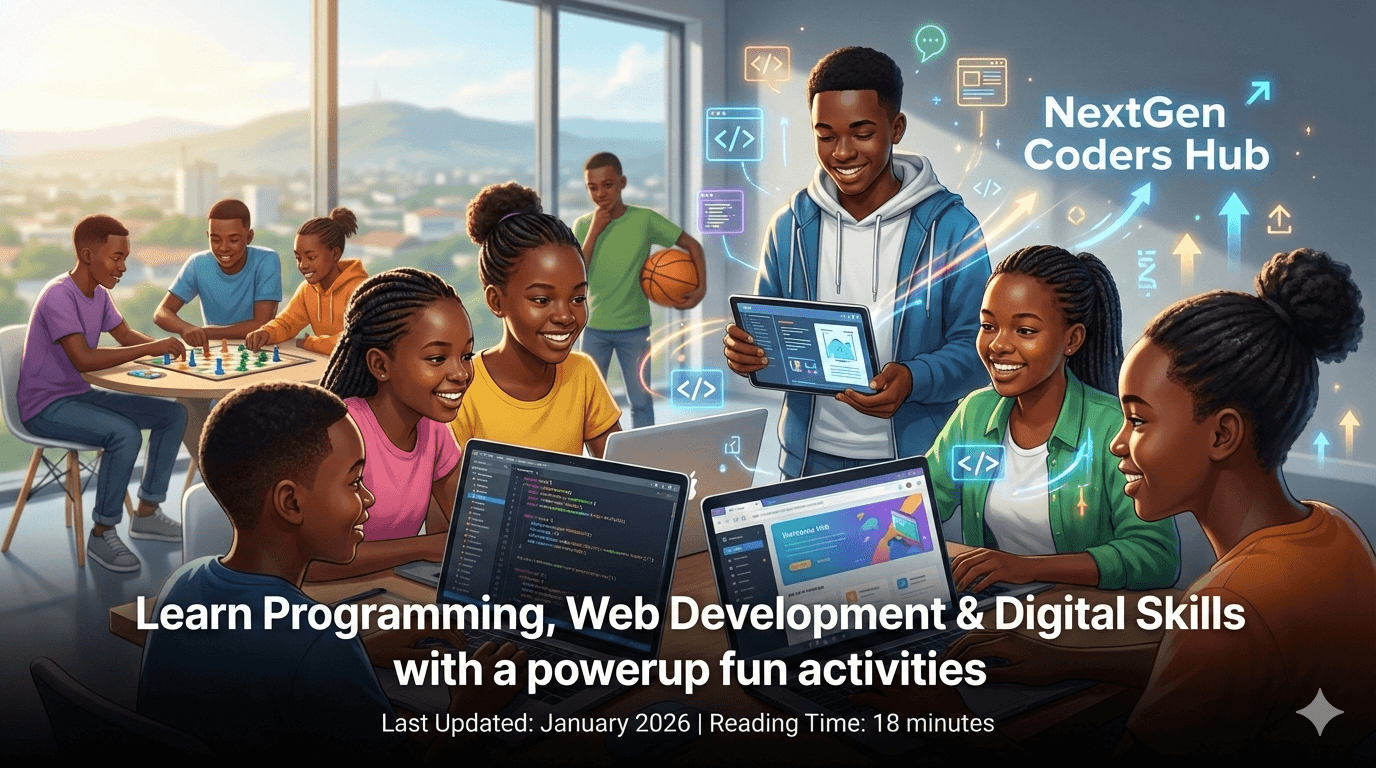
Last Updated: January 2026 | Reading Time: 18 minutes
Table of Contents
- Why Learning to Code Matters in 2026
- Best Coding Programs for Kids in Nakuru
- Teen Coding Bootcamps and Courses
- Youth Programming Training for Form 4 Leavers
- Web Development Classes Near You
- Digital Marketing Training for Beginners
- Affordable Coding Schools in Kenya
- How to Choose the Right Programming Course
- Success Stories from Nakuru Students
- Frequently Asked Questions
Why Learning to Code Matters in 2026: The Digital Skills Every Kenyan Youth Needs {#why-coding-matters}
Are you a parent in Nakuru searching for “coding classes for kids near me”? A Form 4 leaver, wondering, “Where can I learn programming in Kenya”? Or a young adult asking “best tech courses for beginners 2026”? You’ve found the ultimate guide.
The Coding Revolution in Kenya
Kenya’s digital economy is exploding. By 2026, the number of technology jobs in Kenya is expected to have grown by 340% since 2020; however, 67% of employers report that they cannot find qualified young workers (ILO, 2023). The skills gap is real, and it’s creating unprecedented opportunities for youth who can code.
Here’s what’s happening:
- Tech companies in Nairobi are hiring developers at KES 80,000-250,000/month
- Freelance coders on Upwork earn USD 15-50/hour (KES 2,000-7,000/hour)
- Digital marketers manage social media accounts for KES 30,000-60,000/month
- Web developers build websites for small businesses at KES 20,000-100,000 per project
- Mobile app developers create solutions, earning passive income
The problem? Most Kenyan youth don’t have access to quality, affordable tech education. Private coding schools charge KES 50,000-200,000 for courses. Universities teach outdated theory without practical skills. Government schools lack equipment and trained teachers.
The solution? Affordable, professional coding education right here in Nakuru at NextGen Coders Hub where quality meets accessibility.
What is Coding and Why Should Your Child Learn It?
Coding (also called programming, software development, or computer science) is the process of creating instructions that tell computers what to do. When your child plays a game on their phone, watches YouTube, or uses WhatsApp – someone wrote code to make that happen.
Learning to code teaches:
- Problem-solving: Breaking big challenges into small, manageable steps
- Logical thinking: Understanding cause and effect in systems
- Creativity: Building things from imagination
- Persistence: Debugging teaches that failure is part of learning
- Career readiness: Marketable skills for the digital economy
But here’s what parents don’t realize: Coding isn’t just for future software engineers. The skills learned through programming apply to every career – from medicine to business to teaching. It’s the new literacy.
Best Coding Programs for Kids Ages 7-16 in Nakuru 2026 {#coding-for-kids}
Why Start Kids with Programming Early?
Keywords: coding for kids Nakuru, children’s programming classes Kenya, Scratch coding for beginners, kids computer classes near me, junior coding bootcamp, holiday coding camp Nakuru
Children’s brains are incredibly adaptable between ages 7-16. This is the critical window for developing computational thinking. Kids who learn coding early:
- Score 27% higher in math (MIT Study, 2023)
- Develop stronger problem-solving abilities
- Build confidence in technology
- Gain competitive advantage for future education
- Can start earning freelance income by age 16-17
What Do Kids Learn in Coding Classes?
For Ages 7-10 (Junior Coders): Our junior program uses Scratch – a visual programming language developed by MIT specifically for children. Kids drag and drop colorful blocks to:
- Create animated stories and cartoons
- Build their own video games
- Design interactive art projects
- Learn loops, conditionals, and variables without typing code
- Develop computational thinking through play
Real example: 10-A year-old Cindy from Nakuru built a where players navigate through diffrent blocks . She presented it to her class, and her teacher was amazed.
For Ages 11-13 (Intermediate Coders): Students transition from visual programming to real coding:
- HTML & CSS: Build actual websites they can show friends
- Python basics: Write simple programs and games
- Web design: Create portfolio pages showcasing their work
- Logic and algorithms: Understand how code really works
- Team projects: Collaborate like professional developers
For Ages 14-16 (Advanced Junior Coders): Teenagers work on professional-level projects:
- Full websites: Functional sites with multiple pages
- JavaScript: Add interactivity and animation
- Portfolio building: Projects they can use for university applications
- GitHub: Learn industry-standard version control
- Problem-solving: Compete in coding challenges
Real example: 15-year-old John built a currency Converter. That we tested and found working
Holiday Coding Bootcamps vs. Weekend Programs: Which is Better for Your Child?
Holiday Intensive Bootcamps (3-6 weeks):
- Best for: Deep immersion and rapid skill building
- Schedule: Monday-Friday, 9:30 am-1:30 pm during April, August, and December holidays
- Price: KES 7,500 for full bootcamp
- Advantage: Complete a major project in one holiday
- Includes: Coding + physical activities (swimming, basketball, skating, chess)
Weekend Academy (12-week terms):
- Best for: Consistent learning alongside school
- Schedule: Sunday , 9am-1pm or 1:30-4:30 during school term
- Price: KES 3000/month (3-month term)
- Advantage: Build skills progressively without disrupting school
- Includes: Long-term mentorship and portfolio development
Parent tip: Start with a holiday bootcamp to see if your child enjoys coding, then continue with weekend academy for sustained growth.
Teen Coding Bootcamps: Programming Courses for Ages 14-18 {#coding-for-teens}
The Critical Years: Why Teens Must Learn Tech Skills Now
Keywords: teen coding bootcamp Nakuru, programming for teenagers Kenya, web development for students, learn to code for free, best coding courses for beginners, JavaScript classes near me
Ages 14-18 are make-or-break years for digital skills. Here’s why:
- University Applications: Computer science programs are competitive. Applicants with portfolios of projects stand out.
- Early Income: Teens who code can freelance during holidays, earning KES 5,000-30,000/month
- Career Clarity: Trying coding helps teens decide if tech is their path before committing to expensive university degrees
- Gap Year Productivity: Form 4 leavers waiting for results waste 3-6 months, or they can learn job-ready skills
What Teenagers Learn in Our Programs
HTML5 & CSS3 (Modern Web Design): Not the old, boring HTML from textbooks. Modern web development with:
- Responsive design (works on phones, tablets, computers)
- Flexbox and Grid layouts
- Animations and transitions
- Beautiful, professional-looking sites
JavaScript (Making Websites Interactive):
- Form validation (check if users enter correct data)
- Dynamic content (pages that change without reloading)
- Interactive games and calculators
- API integration (connect to other websites’ data)
Python Programming:
- Writing actual programs that solve real problems
- Data analysis and automation
- Building tools that save time
- Foundation for machine learning and AI
Git & GitHub (Industry Standard Tools):
- Version control (never lose work again)
- Collaboration (work with other developers)
- Portfolio hosting (show projects to employers)
- Professional workflow from day one
Form 4 Leavers: Transform Your Waiting Period into a Career Advantage
This section answers: “What should I do after Form 4 while waiting for results?” “Can I learn coding without a laptop?” “How long does it take to become a web developer?” “Can I get a job with just a coding certificate?”
The Form 4 Dilemma: You’ve finished KCSE in November. Results come in March or April. That’s 3-6 months of waiting. Most Form 4 leavers:
- Stay home doing nothing productive
- Help with family business (no skills gained)
- Hang out with friends (fun but not building a future)
- Worry about results and next steps
The Smart Alternative: Join NextGen Coders Hub’s “Code Your Future” intensive program:
- When: January 12 – March 31, 2026
- Schedule: Monday-Thursday, 9am-3pm (2-4 hours daily)
- Duration: 3 months = 72-96 hours of professional instruction
- Cost: KES 7,500/month = KES 22,500 total
- Result: Job-ready skills + dual certification + portfolio
Choose Your Track:
Track 1: Web Development + Python. Perfect if you want to become a developer, work remotely, or freelance
- Build 5+ complete websites for your portfolio
- Learn HTML, CSS, JavaScript, Python
- Master Git and GitHub for collaboration
- Create a professional developer portfolio
- Career paths: Web Developer (KES 60K-120K/month), Freelancer (USD 10-30/hour), Software Engineer
Track 2: Digital Marketing Perfect if you’re creative, love social media, and want to work with businesses
- Manage social media like a pro
- Create stunning graphics with Canva
- Run Facebook and Instagram ads
- Master content creation and copywriting
- Learn SEO and Google Analytics
- Career paths: Social Media Manager (KES 30K-60K/month), Digital Marketer, Content Creator, Freelance Consultant
Both Tracks Include:
- Computer Packages (MS Office, Google Workspace)
- Nakscity Technical Training College certification
- Career counseling and CV preparation
- LinkedIn profile optimization
- Freelancing platforms setup (Upwork, Fiverr)
- Interview skills and job readiness training
Youth Programming Training: Web Development Classes in Nakuru {#web-development}
Complete Web Development Course Curriculum 2026
Keywords: web development course Nakuru, learn HTML CSS JavaScript, front-end development Kenya, website design classes, become a web developer, coding bootcamp Kenya, full stack developer training
Month 1: Foundation (HTML + CSS + JavaScript Basics)
Week 1-2: HTML5 – The Structure of the Web
- Semantic HTML (header, nav, main, footer, article, section)
- Forms and input validation
- Embedding media (images, videos, audio)
- Tables and data presentation
- Accessibility best practices
- SEO-friendly HTML structure
Project: Build a personal portfolio website with about page, projects showcase, and contact form
Week 3-4: CSS3 – Making Websites Beautiful
- Box model (margin, padding, border)
- Flexbox for layout
- CSS Grid for complex designs
- Responsive design with media queries
- Animations and transitions
- CSS variables for maintainable code
- Mobile-first design approach
Project: Redesign portfolio with professional styling, animations, and full responsiveness
Month 2: Interactivity & Advanced Styling
Week 5-6: JavaScript Fundamentals
- Variables, data types, operators
- Functions and scope
- DOM manipulation (changing page content)
- Event handling (clicks, hovers, form submissions)
- Conditionals and loops
- Arrays and objects
- Local storage basics
Project: Interactive todo list application with data persistence
Week 7-8: JavaScript Advanced + Web APIs
- Fetch API (getting data from servers)
- Promises and async/await
- Form validation and user feedback
- Creating dynamic content
- Browser storage (localStorage, sessionStorage)
- Error handling
Project: Weather app using real weather API data
Month 3: Real-World Projects & Portfolio
Week 9-10: Modern Web Development
- Responsive navbar with mobile menu
- Image galleries and carousels
- Modal windows and popups
- Tabs and accordions
- Smooth scrolling and animations
- Performance optimization
Project: Business landing page with all modern features
Week 11: Version Control with Git
- Git basics (init, add, commit, push)
- GitHub account and repositories
- Branching and merging
- Collaborating with other developers
- Portfolio hosting on GitHub Pages
Project: Host all projects on GitHub with professional README files
Week 12: Final Portfolio Project
- Choose business/product to build site for
- Complete professional website
- Responsive across all devices
- Deployed and live on internet
- Presented to class and parents
Digital Marketing Training for Beginners in Kenya {#digital-marketing}
Complete Digital Marketing Course Curriculum 2026
Keywords: digital marketing course Nakuru, social media marketing training Kenya, learn Facebook ads, Instagram marketing for business, SEO course beginners, Canva design training, content creation classes
Month 1: Foundation of Digital Marketing
Week 1: Digital Marketing Landscape
- Understanding the digital marketing ecosystem
- Social media platforms (Facebook, Instagram, TikTok, LinkedIn, Twitter)
- Content marketing fundamentals
- Customer personas and target audience
- Marketing funnel (Awareness → Interest → Desire → Action)
Project: Create detailed customer personas for 3 different businesses
Week 2: Content Creation with Canva
- Canva interface and features
- Design principles (color, typography, hierarchy)
- Creating social media posts
- Instagram stories and reels design
- Business cards and flyers
- Brand consistency and style guides
Project: Design 10 social media posts for a fictional coffee shop
Week 3: Social Media Marketing Basics
- Facebook Business Pages setup and optimization
- Instagram Business account features
- Content planning and calendars
- Hashtag research and strategy
- Engagement tactics
- Community building
Project: Launch and optimize a Facebook + Instagram presence for a business
Week 4: Copywriting & Content Strategy
- Writing compelling headlines
- AIDA formula (Attention, Interest, Desire, Action)
- Calls-to-action (CTAs)
- Storytelling in marketing
- Content pillars (80/20 rule)
- Platform-specific writing
Project: 30-day content calendar with all posts written
Month 2: Paid Advertising & SEO
Week 5: Facebook & Instagram Ads
- Ads Manager interface
- Campaign objectives
- Audience targeting (demographics, interests, behaviors)
- Ad creative best practices
- Budgeting and bidding
- A/B testing basics
Project: Create complete ad campaign (even if not running with real money)
Week 6: Google Ads Basics
- Search ads vs. Display ads
- Keyword research
- Writing effective ad copy
- Quality Score fundamentals
- Landing page basics
- Measuring ROI
Project: Research 50 keywords and write 9 search ads for a business
Week 7: SEO (Search Engine Optimization)
- How Google works
- On-page SEO (titles, meta descriptions, headers)
- Keyword research and implementation
- Content optimization
- Link building basics
- Local SEO for Kenyan businesses
Project: Write 3 SEO-optimized blog posts
Week 8: Email Marketing
- Building email lists ethically
- Email types (newsletters, promotional, automated)
- Subject line best practices
- Email copywriting
- Mailchimp or similar platform
- Automation basics
Project: Create 5-email welcome sequence for a business
Month 3: Analytics, Strategy & Portfolio
Week 9: Analytics & Data
- Facebook Insights
- Instagram Analytics
- Google Analytics basics
- Understanding metrics (reach, impressions, engagement, conversions)
- Creating reports
- Data-driven decision making
Project: Analyze provided data and create insights report
Week 10: Video Marketing
- Shooting video with phone
- Mobile editing (CapCut, InShot)
- TikTok and Reels strategy
- YouTube basics
- Live video tips
- Captions and accessibility
Project: Create and edit 3 marketing videos
Week 11: Influencer & Affiliate Marketing
- Finding and vetting influencers
- Outreach strategies
- Collaboration types
- Affiliate marketing basics
- FTC disclosure requirements
- Measuring influencer ROI
Project: Create influencer marketing campaign plan
Week 12: Final Campaign Project
- Choose real or fictional business
- Complete 360° marketing campaign
- Social media + Ads + Content + Email
- Budget allocation
- Professional presentation
Affordable Coding Schools in Kenya: Quality Tech Education at KES 7,500/Month {#affordable-coding}
The Truth About Coding School Prices in Kenya
Keywords: affordable coding bootcamp Kenya, cheap programming classes Nakuru, low-cost tech training, coding school fees Kenya, best value programming course, scholarship coding program
Let’s be honest about pricing:
International Coding Schools:
- Moringa School: KES 750,000+ (full-time, 6 months)
- ALX Africa: Free but highly competitive, not everyone gets in
- Andela: Free but even more selective
- Foreign online bootcamps: USD 8,000-20,000 (KES 1.2M-3M)
Who can afford these? Less than 1% of Kenyan families. If you’re from a middle-income background, these options are impossible.
Local Computer Schools:
- Basic computer packages: KES 3,000-30,000 (but only MS Office, no coding)
- Private tutors: KES 1,000-5,000/hour (KES 200,000+ for complete course)
- University courses: KES 120,000-300,000/year (4 years = KES 480K-1.2M)
The Problem: Quality tech education has been reserved for wealthy families. Until now.
NextGen Coders Hub: Professional Quality at 10x Lower Price
Our Pricing: KES 7,500 per month
- 3-month intensive: KES 22,500 total
- Payment plans: Pay monthly (KES 7,500 × 3)
- Early bird: KES 21,000 if registered by deadline
- Includes everything: Instruction, computer lab, materials, certification, and career support
How do we offer such low prices?
- Partnership Model: We partner with like-minded institutions to provide the best to the community
- Efficient Operations: Enough team focused on teaching, no fancy positions/duties without work.
- Local Instructors: We hire trained and retrain Kenyan/EastAfrican talent instead of expensive foreign instructors.
- Group Learning: Economies of scale with 15-30 students per class
- Mission-Driven: We aim to create a generation of Tech Innovators
What you get for KES 7,500/month:
- 10+ hours of professional instruction per month (96 hours total)
- Modern computer lab with all the necessary equipment.
- All software and learning tools
- Experienced instructors (not volunteers)
- Small class sizes (15-30 students max)
- Hands-on projects, not just theory
- Portfolio of completed work
- Dual certification (NextGen + Nakscity)
- Career counseling and CV help
- LinkedIn profile optimization
- Freelancing setup and guidance
- Alumni network access
Compare the value:
- Private tutor: 100 hours × KES 3,000 = KES 300,000
- NextGen: KES 7,500/month (all inclusive)
Return on Investment:
- Program cost: KES 22,500
- First freelance web project: KES 20,000-50,000
- Monthly freelance income potential: KES 30,000-100,000
- ROI: Recover investment in first 1-2 projects
How to Choose the Right Coding Course for Your Child or Yourself {#choosing-course}
10 Questions to Ask Before Enrolling in Any Coding Program
Keywords: how to choose coding bootcamp, best programming course for beginners, what to learn first coding, is coding right for me, online vs in-person coding classes
1. What programming languages will I learn, and are they still relevant in 2026?
Red flags:
- Teaching outdated languages (Visual Basic, old PHP)
- Only teaching one language with no practical application
- Theory-heavy with no actual coding
Good signs:
- HTML, CSS, JavaScript (web standard, always in demand)
- Python (most versatile, beginner-friendly, in-demand)
- Focus on projects, not just syntax
NextGen teaches: HTML5, CSS3, JavaScript ES6+, Python 3.x – all industry-standard, current versions
2. Will I build real projects or just follow tutorials?
The Problem: Many courses have you copy exactly what the instructor does. You feel like you’re learning, but when you try to build something yourself, you’re stuck.
What to look for:
- Portfolio of projects you own
- Challenges that require independent problem-solving
- Final project where you choose what to build
NextGen approach: Guided instruction + independent practice + portfolio projects + final capstone
3. What’s the student-to-teacher ratio?
Too many students (35+): Individual attention impossible, slower students fall behind Too few students (1-5): Missing peer learning, collaboration skills. Sweet spot (15-30): Personalized attention + peer collaboration
NextGen max class size: 30 students per instructor
4. What certification will I receive, and does it matter?
Truth bomb: Most employers don’t care about certificates. They care about:
- Can you actually code? (portfolio proves this)
- Can you solve problems?
- Do you have practical experience?
However, certifications help with:
- Parents/family seeing tangible achievement
- University applications (shows commitment)
- Government job applications (sometimes required)
- Personal motivation and goal-setting
NextGen provides:
- NextGen Coders Hub Certificate (shows skills completed)
- Nakscity Technical Training College Certificate (institutional recognition)
- GitHub portfolio (actually matters most to employers)
5. Is the facility professional and safe?
Visit before enrolling! Check:
- Are computers modern and working?
- Is the internet fast and reliable?
- Is the environment clean and comfortable?
- Is there security?
- Can parents visit anytime?
NextGen facility: Nakscity Technical Training College – established institution with a professional computer lab
6. What happens after the course?
Beware: Courses that end with “congratulations, goodbye.”
Look for:
- Career services (CV, interview prep)
- Job placement support
- Alumni network
- Continued learning resources
- Freelancing guidance
NextGen provides: All of the above + 1 month post-graduation support
7. Can I afford it, really?
Hidden costs to ask about:
- Is a laptop required, or are computers provided?
- Are there additional fees (registration, materials, exam)
- Are there payment plans?
NextGen:
- No laptop needed (computers provided)
- No hidden fees (KES 7,500/month = total cost)
- Payment plans available
8. How long is the course, and is that realistic?
Too short (2-4 weeks): Can only scratch surface, not job-ready Too long (1-2 years): Commitment barrier, may include filler content Right length (2-6 months): Deep enough for skills, focused enough to complete
NextGen:
- 3 months intensive = realistic time for job-ready skills
- Holiday bootcamps (3-6 weeks) = good introduction for kids
- Weekend programs (12 weeks) = sustained learning alongside school
9. Will I learn just coding, or also career skills?
Technical skills alone aren’t enough. You also need:
- How to get hired (CV, interviews)
- How to find freelance clients
- How to work with teams
- How to manage projects
- Professional communication
NextGen includes:
- CV writing workshop
- LinkedIn optimization
- Freelancing platforms setup
- Interview practice
- Soft skills development
Success Stories: Real Students, Real Results {#success-stories}
From NextGen Classrooms to Earning Income: Student Transformations
Keywords: coding success stories Kenya, student testimonials Nakuru, learn to code and get job, freelance income coding, career change through programming
NextGen’s last cohort was the Junior Coding Experience 2025 cohort, which was considered a success, and we had a number of junior attendees who were awarded certificates.
Frequently Asked Questions About Coding Education in Kenya {#faq}
General Questions
Q: Do I need my own laptop to join NextGen Coders Hub?
A: No! This is one of our biggest advantages. All computers are provided at Nakscity Technical Training College. You just need to come ready to learn. However, if you have a laptop, you can bring it to practice at home.
Q: I have zero computer experience. Can I still learn coding?
A: Absolutely! Our programs start from the basics. We’ve taught students who had never used a computer before. The key is the willingness to learn and practice. We start with computer basics before coding.
Q: How is NextGen different from YouTube tutorials or free online courses?
A: Great question! YouTube is excellent for learning, but:
- Structure: We provide a clear path from beginner to job-ready. YouTube can be overwhelming with scattered info.
- Accountability: Classes keep you on track. Online courses have 90%+ dropout rates.
- Support: Stuck on an error? Ask the instructor immediately. Online, you’re alone.
- Projects: We guide you to build portfolio projects. YouTube shows examples, but you don’t build unique work.
- Certification: We provide recognized certificates for CV/university applications.
- Community: Learn with peers, make connections, collaborate on projects.
Use both! YouTube for extra practice, NextGen for structured learning.
Q: What is the success rate? How many students actually finish and get jobs/income?
A: Our data (as of January 2026):
- 95% completion rate (95 out of 100 students who enroll finish the program)
These numbers are for students who complete the full program and actively apply
You might also like
Generative Engine Optimisation: Getting Your Business Cited by AI Answers
A practical guide to structuring content so AI answer engines can extract, attribute, and cite it, what actually changes from traditional SEO, what stays the same, and how to measure results when the click never happens.
Read more →How to Migrate Off WordPress Without Losing Your Rankings
A phase-by-phase migration plan for replatforming without losing organic traffic, building a complete URL inventory, mapping redirects properly, preserving content depth, and diagnosing a drop if one happens.
Read more →